Embarking on the journey of cost-effective maintenance, this article delves into the pivotal strategies, techniques, and tools that businesses can leverage to optimize their maintenance operations. From reducing long-term expenses to enhancing overall profitability, the realm of cost-effective maintenance holds the key to sustainable business success.
Importance of Cost-Effective Maintenance
In today’s competitive business environment, cost-effective maintenance plays a crucial role in ensuring the smooth operation of businesses while maximizing profitability. By implementing strategies that optimize maintenance costs without compromising on quality, companies can gain a competitive edge and achieve long-term success.Cost-effective maintenance is particularly important in industries where equipment downtime can result in significant financial losses.
For example, in the manufacturing sector, unplanned equipment failures can lead to production delays, increased labor costs, and dissatisfied customers. By implementing cost-effective maintenance practices such as preventive maintenance schedules and condition-based monitoring, companies can minimize the risk of unexpected breakdowns and ensure continuous operations.The impact of cost-effective maintenance on overall profitability cannot be overstated.
By reducing maintenance costs through efficient resource allocation, companies can allocate more resources towards innovation, expansion, and other growth initiatives. Additionally, by prolonging the lifespan of equipment and assets through proactive maintenance strategies, companies can avoid costly replacements and repairs, ultimately improving their bottom line.
Strategies for Achieving Cost-Effective Maintenance
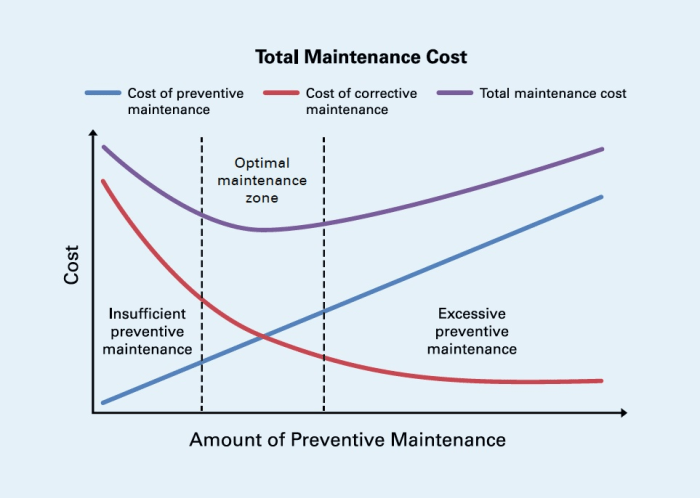
When it comes to maintaining equipment and facilities, finding ways to reduce costs without compromising quality is crucial. By implementing the right strategies, businesses can optimize their maintenance practices and save money in the long run.
Optimizing Maintenance Costs
- Regularly assess equipment performance to identify areas for improvement and potential cost savings.
- Implement a predictive maintenance schedule based on data analytics to address issues before they become costly problems.
- Invest in training programs for maintenance staff to enhance their skills and efficiency, leading to better maintenance outcomes and reduced costs.
- Utilize energy-efficient technologies and practices to lower energy consumption and decrease operational expenses.
Preventive Maintenance Tips
- Develop a comprehensive preventive maintenance plan that includes regular inspections, lubrication, and component replacements to prevent unexpected breakdowns.
- Keep detailed records of maintenance activities and equipment history to track performance trends and identify areas for improvement.
- Implement condition-based monitoring to detect early signs of equipment failure and take proactive measures to avoid costly repairs.
Role of Technology in Cost-Effective Maintenance
- Utilize maintenance management software to streamline work orders, track inventory, and schedule maintenance tasks efficiently.
- Implement IoT sensors and predictive analytics to monitor equipment health in real-time and predict maintenance needs accurately.
- Explore the use of drones for inspecting hard-to-reach areas and conducting maintenance activities safely and cost-effectively.
Cost-Effective Maintenance Techniques
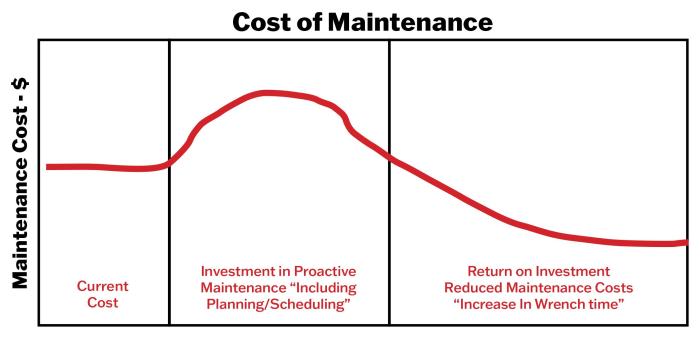
When it comes to cost-effective maintenance techniques, efficiency and careful planning are key elements. By outlining the best practices for scheduling maintenance tasks efficiently, comparing reactive and proactive maintenance approaches, and exploring innovative techniques in the industry, businesses can optimize their maintenance processes while minimizing costs.
Scheduling Maintenance Tasks Efficiently
- Implement a preventive maintenance schedule based on equipment usage, manufacturer recommendations, and historical data to avoid unexpected breakdowns.
- Utilize computerized maintenance management systems (CMMS) to track maintenance activities, schedule tasks, and prioritize work orders effectively.
- Coordinate maintenance activities with production schedules to minimize downtime and maximize productivity.
Comparing Maintenance Approaches: Reactive vs. Proactive
- Reactive Maintenance:Involves fixing equipment after failure, leading to higher repair costs, downtime, and potential safety risks.
- Proactive Maintenance:Focuses on preventing failures through regular inspections, predictive maintenance, and condition monitoring, reducing overall maintenance costs and extending equipment lifespan.
Examples of Innovative Cost-Effective Maintenance Techniques
- Utilizing predictive maintenance technologies such as vibration analysis, thermography, and ultrasonic testing to identify potential issues before they escalate.
- Implementing reliability-centered maintenance (RCM) strategies to prioritize maintenance tasks based on criticality and risk assessment, optimizing resources and reducing unnecessary work.
- Exploring the use of IoT sensors and data analytics to monitor equipment performance in real-time, enabling predictive maintenance and data-driven decision-making.
Tools and Technologies for Cost-Effective Maintenance
When it comes to cost-effective maintenance, having the right tools and technologies in place can make a significant difference in streamlining operations and reducing overall expenses. Utilizing software and advanced technologies can help predict maintenance needs, optimize processes, and improve efficiency.
Essential Tools and Software for Streamlining Maintenance Operations
- Computerized Maintenance Management System (CMMS): CMMS software helps track work orders, manage inventory, schedule preventive maintenance, and analyze historical data to improve decision-making.
- Mobile Applications: Mobile apps enable technicians to access work orders, manuals, and other resources on-the-go, increasing productivity and reducing downtime.
- Asset Management Software: Asset management tools allow organizations to monitor equipment performance, track maintenance history, and prioritize maintenance tasks based on criticality.
Benefits of Implementing Predictive Maintenance Systems
- Cost Savings: Predictive maintenance helps identify potential issues before they escalate, reducing the need for costly emergency repairs and minimizing downtime.
- Increased Equipment Reliability: By monitoring equipment condition in real-time, organizations can proactively address maintenance needs, prolonging the lifespan of assets.
- Optimized Maintenance Scheduling: Predictive maintenance systems enable maintenance teams to plan interventions based on actual equipment condition, maximizing efficiency and resource utilization.
IoT and Sensors Contribution to Cost-Effective Maintenance Strategies
- Remote Monitoring: IoT sensors allow organizations to remotely monitor equipment performance, detect anomalies, and predict potential failures, enabling timely maintenance interventions.
- Data-Driven Decision-Making: By collecting and analyzing data from sensors, organizations can gain insights into equipment health, performance trends, and maintenance requirements, facilitating informed decision-making.
- Predictive Analytics: IoT and sensor data can be leveraged to develop predictive maintenance models, enabling organizations to predict failure patterns, optimize maintenance schedules, and minimize operational disruptions.
Last Word
In conclusion, cost-effective maintenance is not just a cost-saving measure but a strategic approach that can drive business growth and efficiency. By implementing the right strategies, techniques, and tools, businesses can pave the way for a more sustainable and profitable future.
Essential FAQs
Why is cost-effective maintenance important for businesses?
Cost-effective maintenance helps businesses optimize their resources, reduce expenses, and improve overall profitability.
What are some examples of industries where cost-effective maintenance is crucial?
Industries such as manufacturing, transportation, and healthcare rely heavily on cost-effective maintenance to ensure smooth operations and cost efficiency.
How can technology enhance cost-effective maintenance practices?
Technology such as predictive maintenance systems and IoT sensors can help businesses streamline maintenance operations, identify potential issues early, and reduce downtime.